1. Strict Quality Demands for Heavy Calcium Stearate in the Coatings Industry
Heavy calcium stearate (including stearic acid-modified calcium carbonate) is one of the most widely used
functional fillers in the coatings industry. Its primary functions are to improve the hiding power, scrub
resistance, and surface smoothness of the finished coating film. In high-value-added applications—such as
high-grade architectural coatings, automotive coatings, and industrial anti-corrosion coatings—the fineness
requirement for heavy calcium stearate has reached 2000 mesh. Furthermore, there are stringent limits on the
uniformity of its particle size distribution.
Industry research shows that particles that are too coarse lead to a sharp decline in coating smoothness and
gloss, while particles that are too fine cause excessive oil absorption, which can trigger coating cracking and
reduced adhesion. Therefore, achieving "precise powder control" has become a core pain point for coating
companies during raw material processing and sourcing.
Traditional grinding equipment operating at the 2000-mesh threshold frequently suffers from two severe
drawbacks. First, the particle size distribution is highly uneven, with an excessive proportion of medium and
coarse particles that cause color variations and microscopic roughness in the coating. Second, parameter
adjustments are rigid and inflexible; the machinery cannot adapt dynamically to fluctuations in raw material
quality or environmental humidity, leading to inconsistent product batches. While these variations might seem
minor in lower-end uses, they can quickly escalate into costly quality incidents in high-grade coating
applications.
2. Meishuo Ring Roller Mill: Dynamic Control via Multi-Stage Classification and
Frequency Conversion
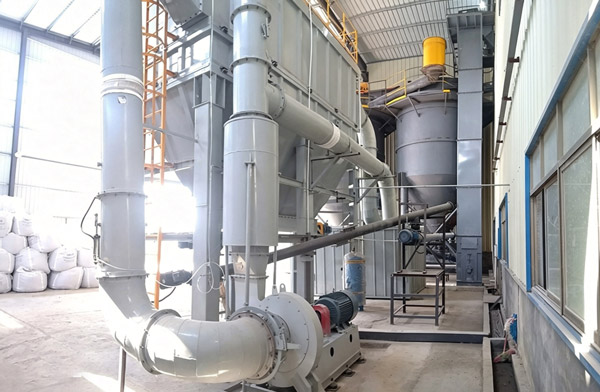
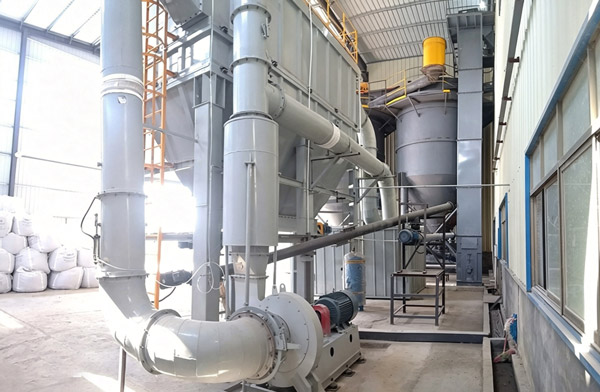
To address these critical industry pain points, Meishuo integrated a combined "multi-stage
classification + variable frequency speed control" system into its ultrafine ring roller mill. This advanced design
allows operators to dynamically adjust grinding parameters in real time based on the exact fineness
requirements of downstream coating formulations, ensuring unprecedented consistency in 2000-mesh
products.
Simultaneously, the integrated high-efficiency powder sorting system instantly intercepts unqualified coarse
particles and returns them to the grinding zone for secondary milling. This entirely eliminates the common
problem of coarse particle contamination found in legacy machinery.
Adaptive Intelligence Architecture
Built upon an intelligent ultrafine mill framework, Meishuo's equipment features real-time sensing of raw
material quality, ambient humidity, and system load fluctuations. This "adaptive" capability ensures the mill
maintains an optimized, stable operating state during long-term production runs—a vital guarantee for coating
companies striving for a "zero-defect" threshold. Furthermore, the mill introduces a major breakthrough in
energy efficiency. By optimizing internal flow fields and grinding structures, it drastically increases production
capacity while significantly lowering unit power consumption, helping clients achieve low-cost, high-quality
manufacturing.
3. Field Performance: Empowering Premium Architectural Paint Manufacturers
In a 2000-mesh heavy calcium stearate project deployed for a well-known, high-end (Grade 5) architectural
coatings company, the Meishuo intelligent ultrafine mill demonstrated exceptional operational performance.
Data collected post-implementation showed that the single-pass yield of 2000-mesh powder increased
significantly, while the proportion of oversized medium and coarse particles plummeted by more than 50%
compared to the client's legacy grinding equipment.
According to feedback from the client's R&D and quality control departments, switching to the Meishuo
ultrafine mill yielded substantial formulation improvements:
Enhanced Hiding Power: The total hiding power of the coating increased by approximately 8%.
Improved Film Durability: Microscopic surface smoothness and scrub resistance showed step-function
improvements.
Market Superiority: The impeccable surface texture gave the client a decisive competitive edge in the
highly contested premium (Grade 5) market.
More importantly, the equipment's intelligent controls enable operators to quickly switch and fine-tune powder
parameters on the control panel to match different coating formulations (e.g., interior latex paints versus
exterior stone-textured paints). This flexible capability is a critical asset for high-end coating companies that
manage diverse product lines and specialize in small-batch, multi-variety operations.
4. Value Upgrade: Shifting from Equipment Supply to End-to-End Solutions
The reason Meishuo's ultrafine grinding mill has become the preferred choice for paint manufacturers extends
beyond its robust mechanical specs; it lies in Meishuo's transition to an end-to-end, lifecycle solution provider.
Breaking away from the traditional manufacturer model of simply selling machinery, Meishuo delivers a
comprehensive, closed-loop "fine powder control solution."
This holistic approach spans from initial raw material quality testing and customized grinding parameter
optimization, through strict mid-term equipment commissioning and professional operator training, to post-
operation maintenance support and final product quality feedback. This unified "equipment + process +
quality" model allows coating enterprises to secure comprehensive technical backing from a single, trusted
partner.
Looking ahead, Meishuo will continue to focus on the precision powder control needs of the coatings
sector, collaborating with global partners to push the boundaries of higher fineness and higher purity in heavy
calcium stearate processing. At the same time, Meishuo plans to extend this proven, intelligent ultrafine
grinding technology into additional high-value-added advanced material sectors, driving the global
manufacturing industry toward a greener, smarter future.