Impact Crusher Overview
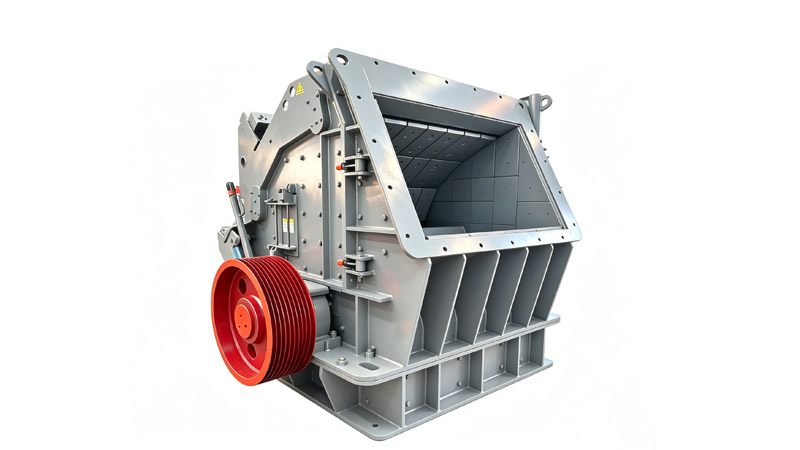
The impact crusher is the go-to secondary or tertiary unit for medium-hard rock, valued for its large reduction ratio and its ability to produce a cubical, well-shaped finished aggregate with a low content of flat and elongated particles. High-speed impact energy crushes material against wear-resistant blow bars and impact plates, and the crushing path can be tuned by adjusting rotor speed and plate gaps to target specific product sizes.
The hydraulic frame opening allows the crusher body to be swung open for rapid blow-bar and liner changeover — a job that takes hours on older designs can be completed in tens of minutes. Combined with high-quality alloy blow bars that offer long service life, the impact crusher delivers a low cost per ton on limestone, dolomite, and recycled concrete.
Key Features
- High impact energy crushing — large reduction ratio up to 20:1
- High wear-resistant blow bars — long service life between changes
- Excellent particle shape — low powder content, cubical product
- Hydraulic frame opening — fast maintenance, minimal downtime
- Adjustable rotor speed and impact plate gaps — tunable product size
- Available in capacities from 40 t/h to over 350 t/h
Typical Applications
The impact crusher is the standard secondary unit in limestone and dolomite aggregate lines, and the core machine in construction & demolition waste recycling plants. It also handles softer minerals such as gypsum, coal, and slag. Because it produces a good cubical shape directly, it can often eliminate a VSI stage in medium-hard rock circuits, saving capital and operating cost.
How to Choose
For soft-to-medium rocks (limestone, dolomite, recycled concrete), a standard rotor configuration is sufficient. For more abrasive feed or higher wear life, choose models with thicker blow bars and optional third impact plate. Feed size should stay within the rotor diameter guidelines — oversized feed reduces throughput and accelerates wear.
FAQ
Q: Can an impact crusher handle hard granite? A: Technically yes, but wear costs are high — for abrasive granite prefer a cone crusher for the secondary stage. Q: How often are blow bars replaced? A: Depends on feed abrasiveness; typically every 80-300 operating hours for hard rock, longer for limestone. Q: What is the best way to control product size? A: Adjust rotor speed and the gap between the blow bars and impact plates; run a closed circuit with a screen for tight size control.