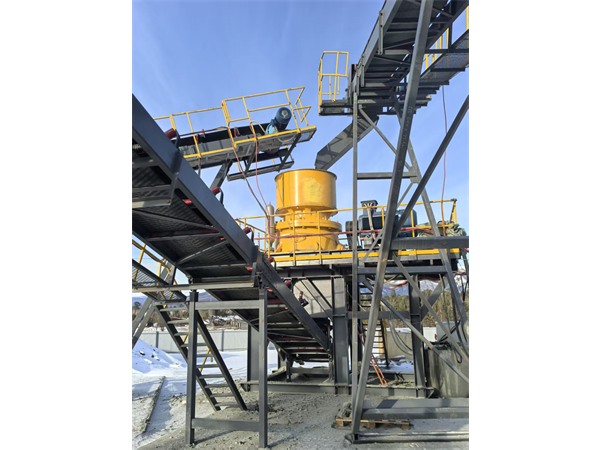
In Siberian winters with temperatures as low as -20°C, this granite tailings production line maintains a stable output of 180 tons per hour.
—Case Study: Omsk Granite Tailings Aggregate Production Line, Russia
Project Location: Omsk Oblast
Raw Material: Granite tailings (maximum particle size 200 mm)
Main Equipment: CS430 cone crusher + 3YK2160 vibrating screen
Ambient Temperature: Winter -20°C and below
Key Data: Stable output 180 t/h · Maximum feed size 200 mm · Trilingual (Chinese, Russian, English) UI
Key Figures
Stable output 180 t/h Customer's core needs
Winter temperature -20°C Long-term operating conditions
Maximum feed size 200 mm Maximum raw material particle size
Localization One-click switching between Chinese/Russian/English trilingual HMI
I. Project Background: Customers in Siberia and the Tailings Challenge
The customer, located in Omsk Oblast, Russia, is a joint venture engaged in granite mining and building materials production. As mining of the main ore body progresses, large quantities of granite tailings are stockpiled in spoil heaps, occupying land and creating environmental pressure. To unlock the value of these tailings, the client decided to build an aggregate processing line to convert the stockpiled tailings into qualified building aggregates.
Several key requirements for the project:
Raw Material Characteristics
High Hardness: Granite, Mohs hardness 6–7
Large Particle Size: Maximum feed size 200 mm, containing silt and debris
Continuous Feeding: Tailings moisture content fluctuates significantly with the seasons.
Climate and Environmental Challenges
Winter temperatures consistently below -20°C, with extreme cold days reaching -35°C. Conventional greases easily solidify, and sealing rubber is prone to cracking.
Short construction period, concentrated outdoor commissioning windows.
Operators are native Russian speakers, requiring a localized human-machine interface.
In short, the client didn't just want a "usable" piece of equipment; they wanted a complete production line that could operate reliably from autumn to the following spring in the frigid environment of Omsk.
II. What We Delivered to Our Customers
Focusing on our customers' pain points, we didn't simply ship the standard machine directly. Instead, we redesigned the engineering specifically for this raw material and climate:
Main Unit Selection: CS430 Cone Crusher (S1 chamber type, feed limit 300 mm)
—Completely covers 200 mm of tailings, with sufficient safety margin in the feed
Screening Stage: 3YK2160 Circular Vibrating Screen, Thin Oil Lubrication
—Three-layer grading, adapted to cold-weather thin oil lubrication mode
Main Body Material: Low-temperature resistant low-alloy high-strength structural steel
—Maintains impact toughness at low temperatures, preventing cold brittleness and cracking of the base material
Lubrication System: Intelligent temperature-controlled lubrication + preheating system
—Automatic preheating before start-up, preventing lubrication failure at -20℃
Seals: Low-temperature resistant fluororubber / special silicone rubber
—Does not harden, leak oil, or allow dust and snow ingress in extremely cold conditions
Hydraulic and Lubricating Oils: Thin oil lubrication for the vibrating screen, customized cold-weather machine oil
— Low-temperature fluidity and viscosity index meet the requirements for thin oil lubrication.
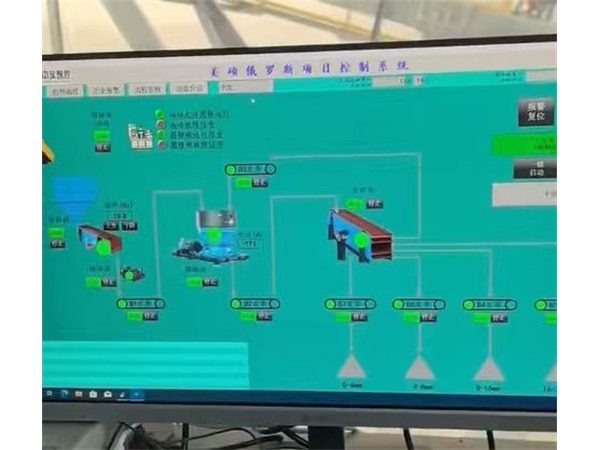
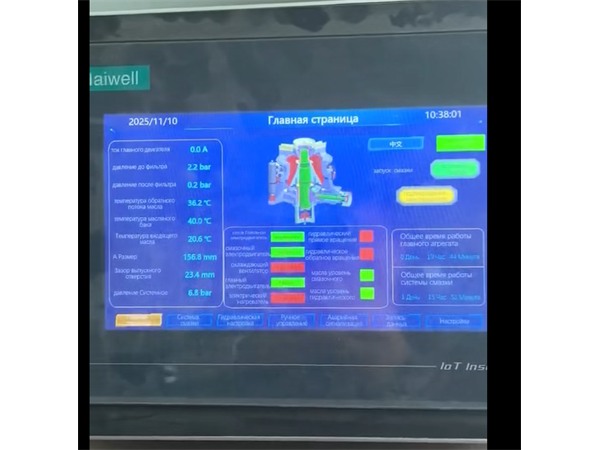
Overall Control System: Russian HMI with one-click switching between Chinese/Russian/English
—Local operators can easily get started, and the entire production line status is clearly displayed.
Three, Five Core Technologies for High-Altitude Cold Weather: Turning "Low Temperature" into "Controllable"
Intelligent Temperature-Controlled Lubrication + Preheating System: The cone crusher is equipped with an electric heating and temperature control module. Before startup, the lubricating oil is heated to the working viscosity range; during operation, oil temperature, oil pressure, and oil level are continuously monitored. Once the temperature deviates from the threshold, the system automatically alarms and shuts down, preventing "cold start bearing failure" from the source. This directly solves the customer's biggest concern: "bearing failure during startup at -20 to -30 degrees Celsius."
Low-Temperature Resistant Low-Alloy High-Strength Steel Body: Key load-bearing components such as the frame, base, and main shaft are all selected based on impact toughness at -40℃, with significantly lower low-temperature brittleness sensitivity than ordinary Q345. This determines the structural stability of the equipment in repeated freeze-thaw cycles and sudden cold spells.
Low-Temperature Resistant Fluororubber/Special Silicone Rubber Seals: Both dynamic and static seals are replaced with low-temperature resistant fluororubber or special silicone rubber, maintaining elasticity even at -40℃. This ensures leak-proof sealing against oil and dust/snow, eliminating the problems of oil leakage, contamination, and accelerated wear caused by the hardening and cracking of ordinary nitrile rubber in extreme cold.
Vibrating Screen Thin Oil Lubrication + Customized Cold-Region Mechanical Oil: The vibrating screen exciter uses thin oil lubrication, combined with specially formulated mechanical oil for cold regions (low pour point, high viscosity index, anti-wear). This ensures that the bearings maintain a complete oil film even at low temperatures, significantly extending bearing life under the same operating conditions.
Russian Control Panel: All Parameters Under One Screen: The main control panel uses a Russian HMI (also supporting one-click switching between Chinese/Russian/English). Core parameters such as main motor current, pressure before and after filtration, lubricating oil temperature, oil tank temperature, feed port gap, and discharge port opening are clearly visible on the same page. On-site engineers can operate the equipment without training, and the remote maintenance team can simultaneously access data, allowing customers to shift from "human monitoring" to "screen-based operation."
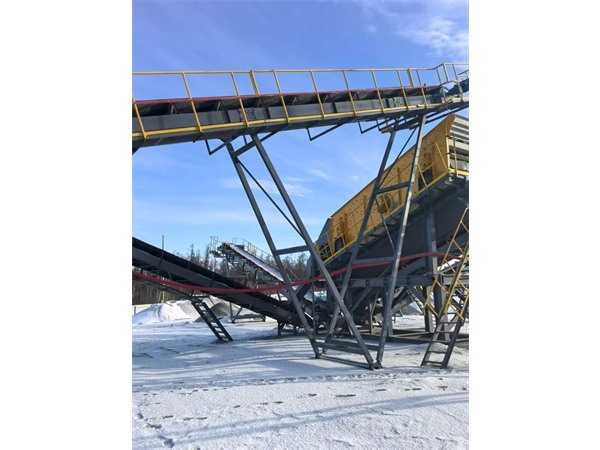
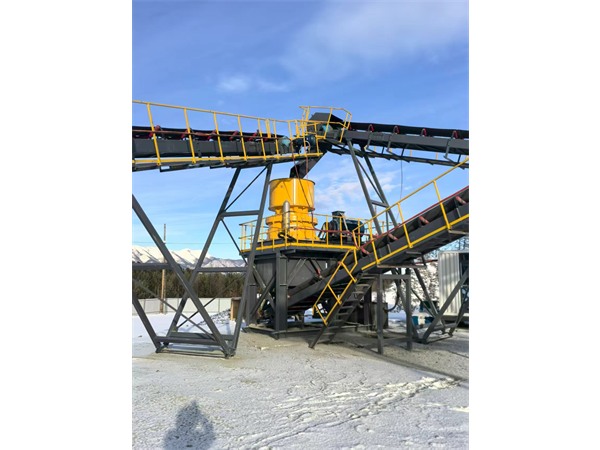
IV. Project Overview: From a Single Crane to a Stable 180 t/h The project site experienced consistently temperatures below 0℃, with the ground covered in snow. From equipment arrival, installation, commissioning to production, everything proceeded according to the high-altitude, cold-weather construction schedule.
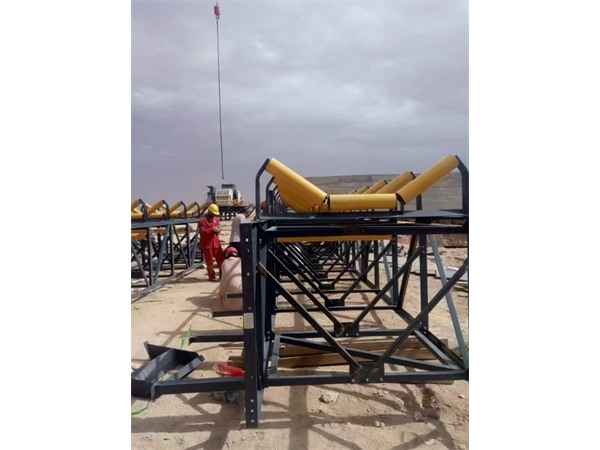
Construction Phase – Steel structures and buffer rollers were assembled outdoors, and hoisting operations were completed in the winter winds. The main steel frame was assembled in one go, and the welding and low-temperature impact testing of the high-altitude steel were performed according to the established processes.
Operational Overview – Despite the snow cover, the production site remained clean and orderly; the work aisles around the CS430 main unit were unobstructed, ensuring safe inspections; the Russian-language HMI displayed real-time parameters such as main motor current, pressure, oil temperature, oil tank temperature, and feed port status.
"Here, our equipment endures six months of freezing temperatures and six months of rush production. The first time we started it up and saw the lubricating oil temperature and pressure stabilize at the HMI, we knew this equipment was made specifically for us." — Omsk Project Site Operations Manager
V. The Real Value Received by the Customer
In this order, we didn't discuss "configuration cost-effectiveness" with the customer; we discussed whether the customer could reliably turn tailings into cash in a winter of -20°C. The results were:
1 Stable 180 t/h Production, More Cost-Effective on a Monthly Basis
Stable Operation: The equipment has maintained a stable output of 180 t/h since commissioning. Based on 14-16 hours of effective working time per day, the daily output can reach 2500+ tons.
Uninterrupted Operation in Winter: High-altitude adaptability maximizes the winter production window, allowing the customer to control the tailings processing pace.
2 Reduced Failure Rate and Downtime Losses
Less Bearing Failure: Temperature-controlled preheating + high-altitude oils significantly reduce the bearing failure rate compared to other models used in the same region.
Reduced Oil Leaks: Fluororubber/silicone rubber seals solve the persistent problem of oil leaks in extreme cold, simultaneously reducing environmental pressure.
3 Localized Operation, Lowering the Barrier to Maintenance
A Russian-language HMI allows on-site Russian engineers to get started directly, eliminating the need for Chinese/translation.
A single screen on the central control panel provides a comprehensive view of operating parameters, enabling new employees to operate independently after simple training.
4 Tailings Transformed into Aggregate, A Dual Revenue Stream for Environmental Protection
Ten-year-old tailings have a proper disposal method, reducing environmental pressure.
Aggregate products are integrated into the local building materials market, creating a stable new cash flow.
VI. In Conclusion: High Altitude Areas Are More Than Just "Heating" The most common problem in high-altitude projects is that "customers buy a tropical model, only to have it break down in winter." The real value of the Omsk project lies not in the fact that the CS430 achieved 180 t/h—which is what it was supposed to do—but in the fact that we brought the five details of "steel, rubber, oil, lubrication, and control console" to the -40℃ line, ensuring that the equipment remains a machine with stable cash flow for the customer even in the Omsk winter.