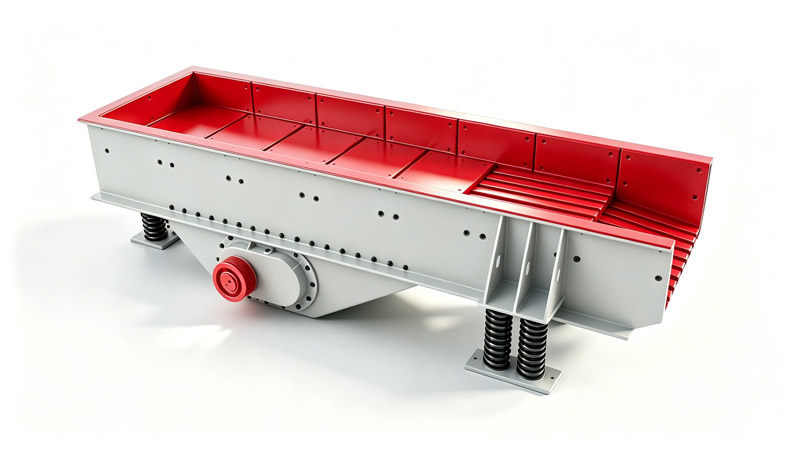
Vibrating Feeder Overview
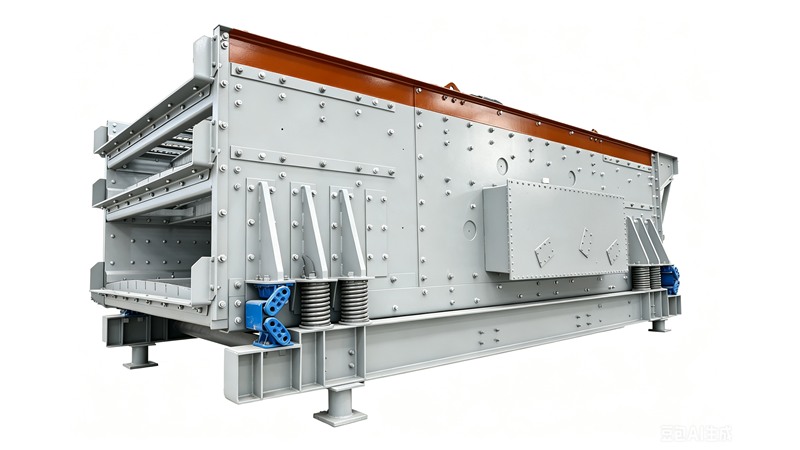
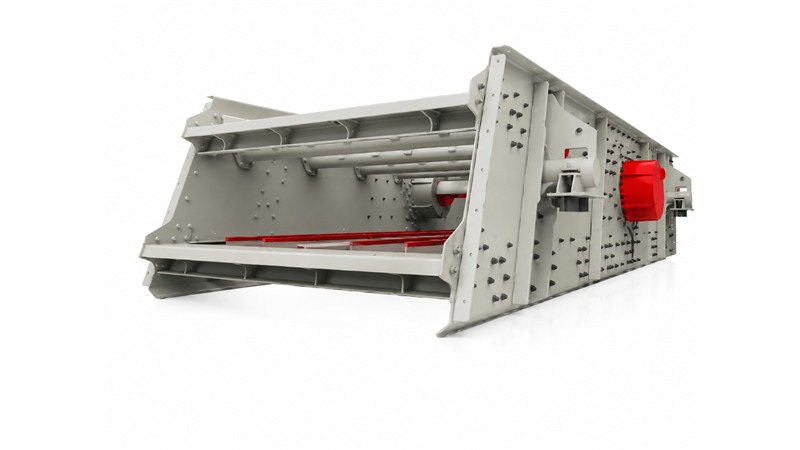
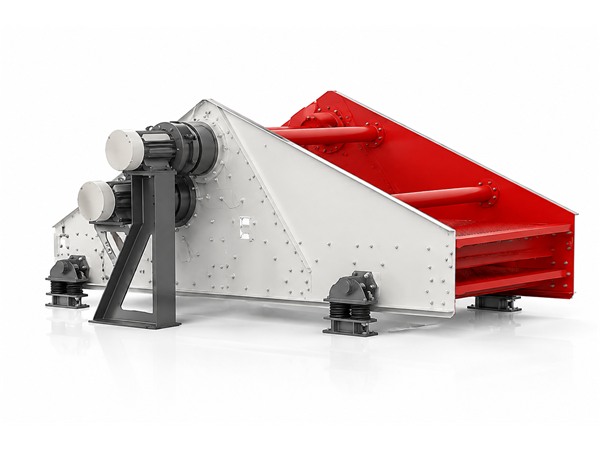
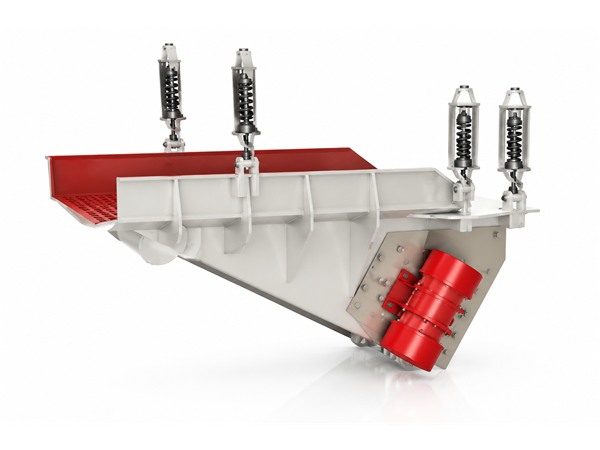
The ZSW series vibrating feeder delivers uniform, continuous, and adjustable feeding to crushers and screens, while its bar-screen (grizzly) deck pre-screens fine material during feeding. This pre-screening removes undersize before it reaches the crusher, improving the efficiency of the downstream crushing circuit and reducing wear on the crusher itself.
Two vibrating motors provide the excitation force, and the amplitude can be adjusted by changing the eccentric weights, giving operators precise control over feed rate. The simple, robust structure with a wear-resistant liner keeps maintenance costs low.
Key Features
- Uniform and continuous feeding — adjustable excitation force
- Bar screen for pre-screening — removes fines before the crusher
- Adjustable excitation force — precise feed rate control
- Simple structure — easy maintenance
- Wear-resistant liner — long service life
- Available in a range of sizes for 30-800 t/h plants
Typical Applications
The vibrating feeder is installed ahead of primary jaw crushers, impact crushers, and in sand and gravel plants, silo discharging, and batching systems. In a typical aggregate line it receives truck-fed rock and feeds it steadily to the primary crusher while bleeding off -100 mm fines to a bypass conveyor.
Operational Tips
Set the feeder amplitude and motor speed to match the crusher's optimum feed rate — overfeeding causes crusher jams, underfeeding wastes capacity. Keep the grizzly gaps clean of wedged stones, and inspect the liner and suspension springs at each service. For wet, sticky feed, consider an apron-type feeder or increase the grizzly spacing.
FAQ
Q: What is the purpose of the bar screen? A: It pre-screens fine material so only oversized rock reaches the crusher, increasing crusher efficiency and reducing wear. Q: Can the feed rate be adjusted during operation? A: Yes, by adjusting the eccentric weight on the vibrating motors or with a variable frequency drive. Q: What maintenance is required? A: Regular checks of the suspension springs, motor bolts, and liner wear — typically a weekly inspection is sufficient.