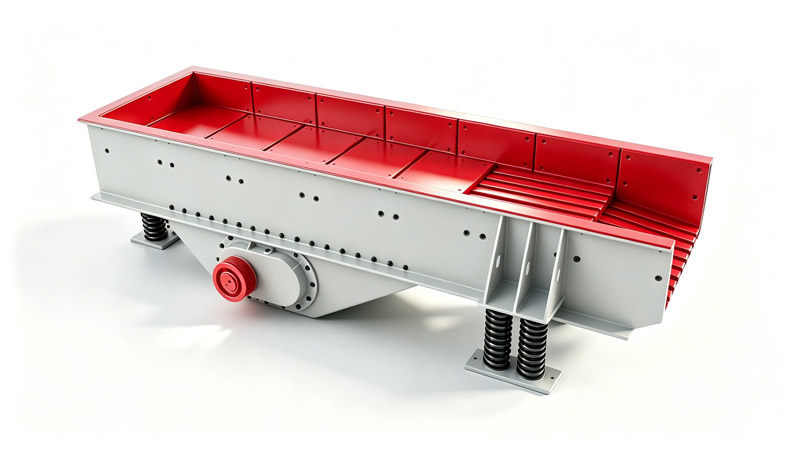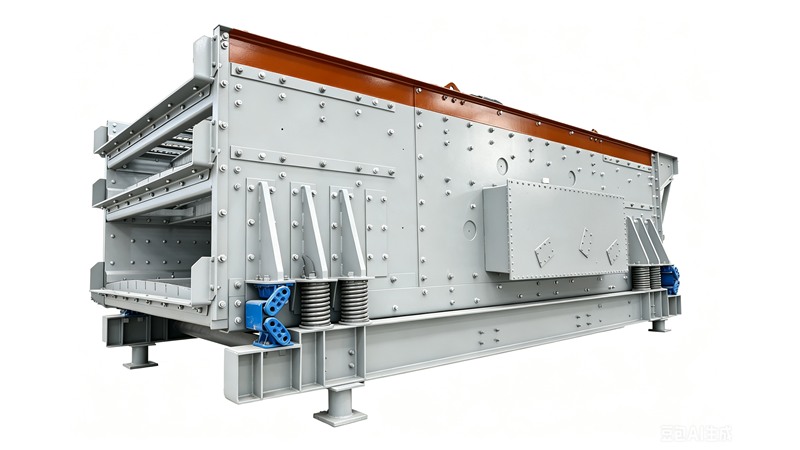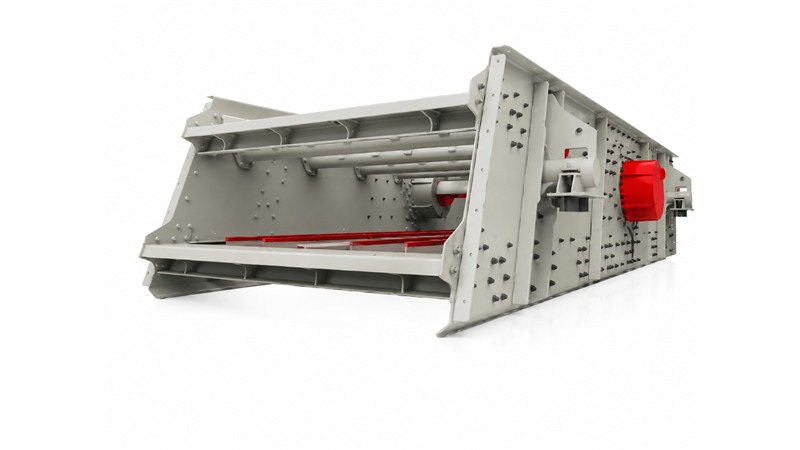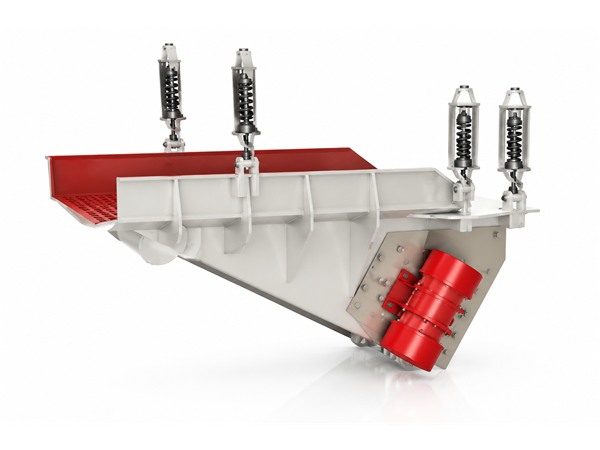
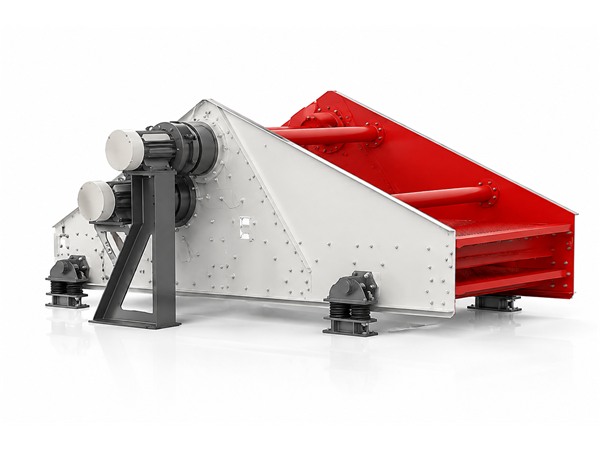
ZK Linear Vibrating Screen Overview
The ZK linear vibrating screen uses a block eccentric exciter to produce straight-line (linear) vibration, which conveys material in a controlled, uniform manner while providing excellent stratification and dewatering. Its high excitation force intensity delivers high screening efficiency and large capacity (7-576 t/h) across 8 models, making it the preferred screen for fine classification and dewatering duties.
The screen box features a high-strength bolted beam-to-box connection that eliminates welding stress and simplifies repair. A flexible tire coupling between the exciter and motor smooths operation and reduces shock loads, while the simple structure keeps maintenance straightforward.
Key Features
- Block eccentric exciter — high excitation force intensity
- High-strength bolted beam-to-box connection — no welding required
- Simple structure — easy maintenance and repair
- Tire coupling flexible connection — smoother, more stable operation
- 8 models — screen area from 3.0 to 14.4 m²
- Customizable screen mesh — woven wire, wedge wire, rubber, polyurethane
Typical Applications
The ZK linear screen is used for fine classification, dewatering, and desliming in aggregate production, mining, coal preparation and washing, mineral processing, and construction waste recycling. Its straight-line motion makes it especially effective for dewatering sand and coal slurry, where the linear throw helps drain water quickly.
Selection Tips
Choose the model based on screen area and required capacity, then select the mesh type for the application: wedge wire for dewatering, polyurethane for abrasive wear resistance, and rubber for impact areas. For dewatering duty, pair the screen with a cyclone underflow feed to maximize water removal efficiency.
FAQ
Q: What is the advantage of linear motion? A: Linear motion conveys material in a straight line, providing efficient dewatering and precise fine classification without the bouncing of circular motion. Q: How does it differ from a YK circular screen? A: YK is better for coarse, high-capacity classification; ZK excels at fine sizing and dewatering. Q: How often should the tire coupling be replaced? A: Every 12-24 months depending on duty — inspect for cracking at each service interval.