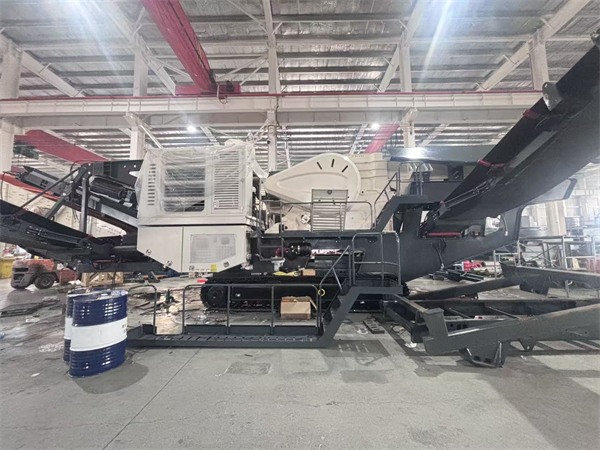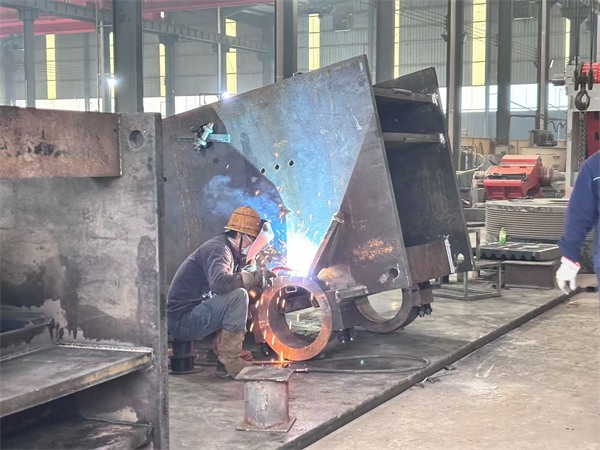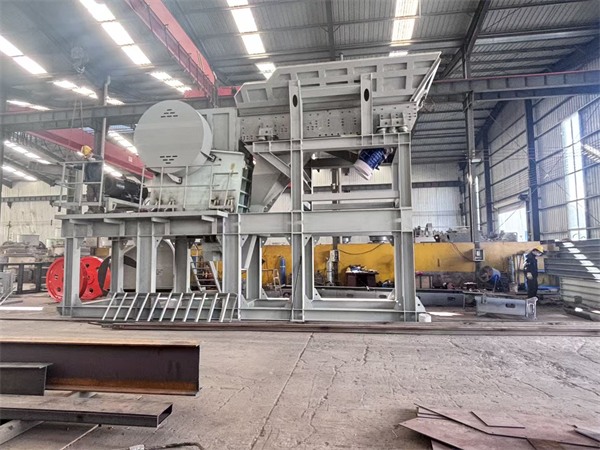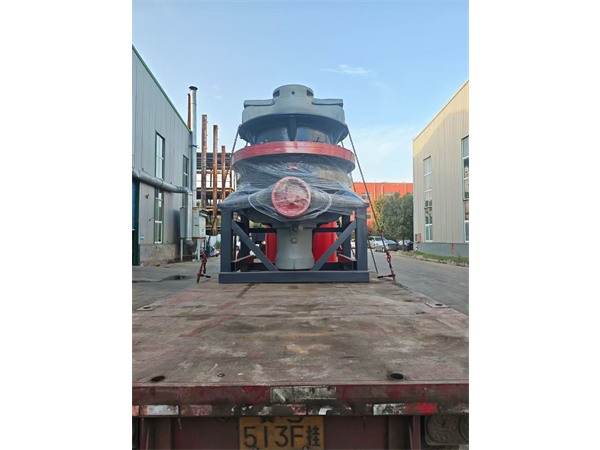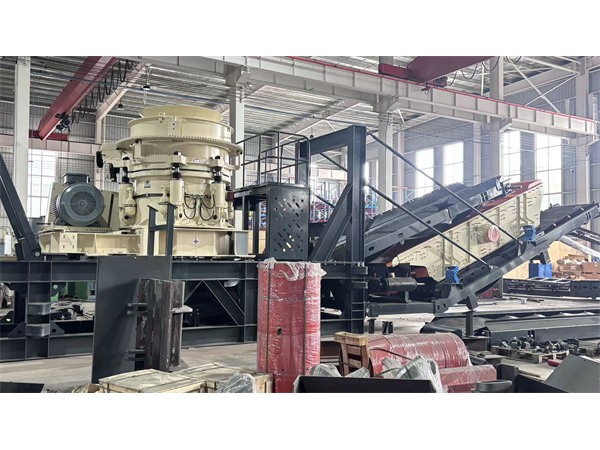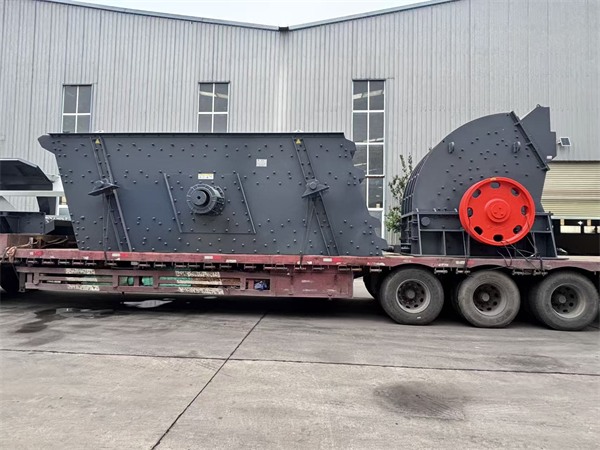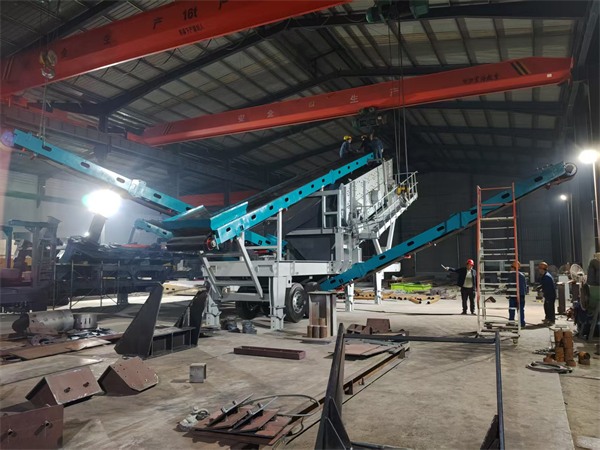
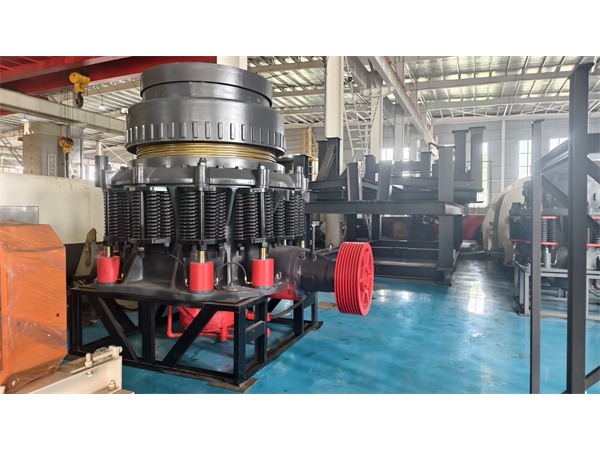
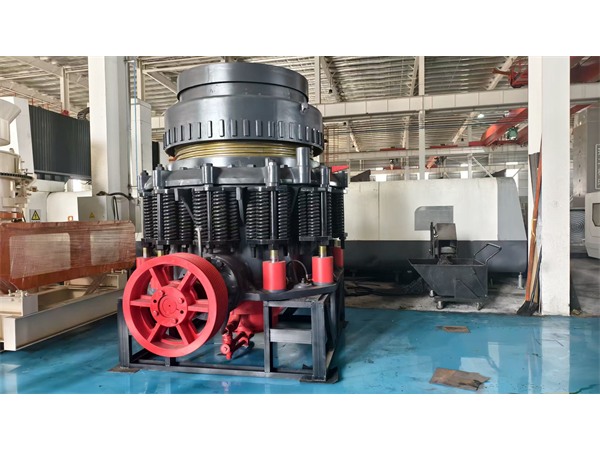
 The PY-series spring cone crusher has completed its assembly and is now entering the pre-shipment testing phase. In the assembly workshop of Zhengzhou Meishuo Intelligent Equipment, a dark-gray PY-series spring cone crusher—fully assembled and mounted on a steel base—awaits its no-load test run. The unit features a series of heavy-duty "tramp iron" protection springs encircling the main body, with hydraulic clearing cylinders installed at the base and a large, multi-groove red pulley mounted on the side. Nearby, several other cone crushers of various specifications are also undergoing assembly, reflecting a steady and well-paced production schedule.
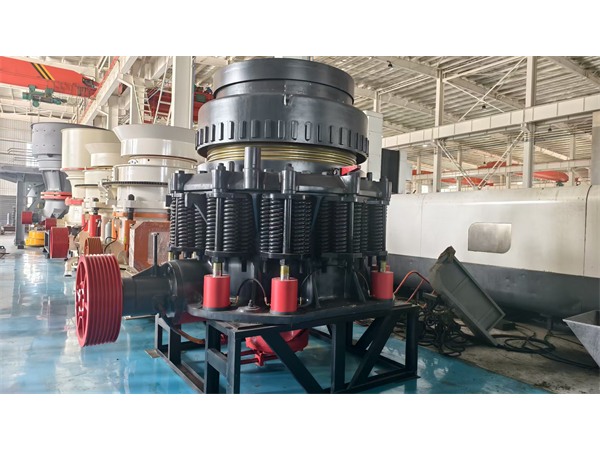
Although single-cylinder and multi-cylinder hydraulic cone crushers are becoming increasingly prevalent in the market, traditional spring cone crushers remain in steady demand—particularly for small-to-medium-scale mining operations and aggregate projects with tighter budgets. The reason is straightforward: their mechanical design is intuitive, lacking complex electronic controls or intricate hydraulic valve assemblies. On-site mechanics can resolve the vast majority of routine issues based on their own experience, and both the initial capital investment and long-term maintenance costs are highly manageable. To address the classic drawback of traditional spring cone crushers—the difficulty of clearing the crushing chamber following the entry of tramp iron or an unexpected power outage—this model incorporates hydraulic clearing cylinders at the base, in addition to the standard spring-based tramp iron protection. Should the crusher become jammed or overloaded, operators can use the hydraulic system to lift the adjustment ring and discharge the trapped material. This eliminates the need for the manual, labor-intensive removal of rocks—a common necessity with older, legacy models—thereby significantly reducing downtime. According to the technical specifications for the Meishuo PY series cone crushers, this product line includes three types of crushing chambers—Standard (PYB), Medium (PYZ), and Short-head (PYD)—designed to handle various applications ranging from primary/secondary crushing to fine crushing. The series offers a broad range of models, with mantle diameters spanning from 600 mm to 2200 mm and unit weights between 5 and 80 tons, making them suitable for operations of any scale, from small stone quarries to large-scale mines. A typical mid-range configuration (e.g., the PYB1200) features a 110 kW motor, a maximum feed size of 145 mm, a discharge setting range of 20–50 mm, and a nominal capacity of 110–168 t/h. For high-capacity requirements, a model such as the PYB1750 is equipped with a 160 kW motor, accepts a maximum feed size of 215 mm, offers a discharge setting range of 25–50 mm, and provides a nominal capacity of 280–480 t/h. For fine-crushing applications—where a smaller final product size is required—the Short-head (PYD) configuration of the same size can be selected, allowing the discharge setting to be adjusted to as small as 3–13 mm or 3–15 mm.
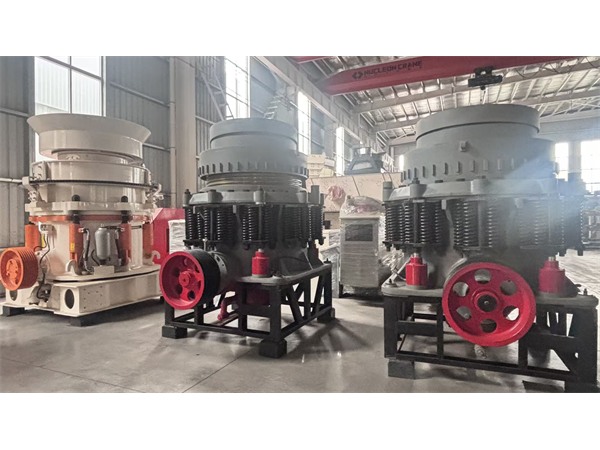
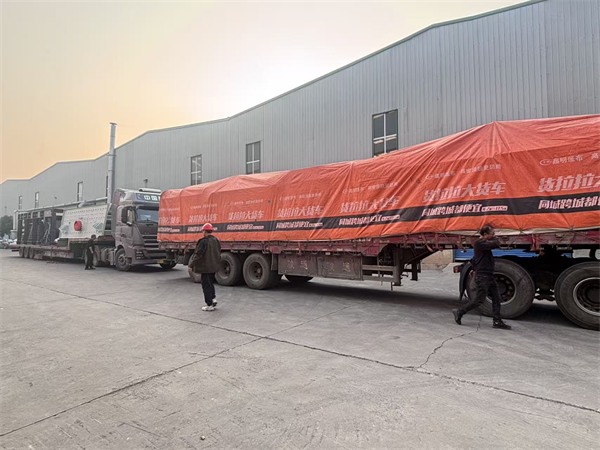
Currently, quality inspection personnel in the workshop are conducting final checks on the equipment’s drive clearances, lubrication circuits, and the sealing integrity of the hydraulic cylinders. Once the equipment has successfully completed a continuous no-load test run and all performance indicators have been verified as normal, it will be prepared with anti-rust packaging and loaded for shipment to its destination.